
APuZ - Aus Politik und Zeitgeschichte
Streitfall Biodiversität. Konflikte verstehen und gestalten
Diana Hummel et al.
2026
The project develops options for action that demonstrate how conflicts related to the conservation and use of biodiversity can be dealt with in a constructive manner.
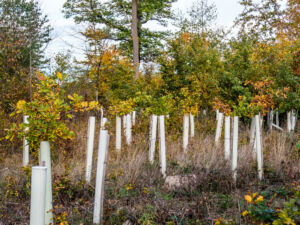
The urgently needed transformative change to curb the biodiversity crisis does not always proceed without conflict. To effectively support the conservation and sustainable use of nature, the project investigates constructive approaches to conflict resolution based on empirical studies of disputes in the context of forest restoration and the renaturation of water bodies.
Conflicts in the field of biodiversity are characterized by a close interplay of natural and social factors. The differing interests, values, and practices of heterogeneous actors intersect with biological, ecological, and geophysical processes. Building on an interdisciplinary framework for researching social-ecological conflicts, the project examines selected conflicts in the context of biodiversity conservation and use through empirical case studies. The project focuses on conflicts related to forest conversion and the restoration of water bodies. Using participatory methods such as discussion groups and workshops, the specific challenges and points of contention are identified in collaboration with relevant stakeholders (e.g., actors from forestry and agriculture, government nature conservation agencies, public administration, tourism, citizens’ initiatives, and associations). Building on this, the project develops locally adapted and practically implementable strategies for constructively managing the respective conflicts.
Even today, there are far-reaching conflicts and trade-offs between climate protection, climate adaptation, and nature conservation – or between the protection of ecosystems and their sustainable use. For example, differences and disputes frequently arise regarding measures to restore damaged forest areas or to renaturalize rivers, wetlands, or bogs. These conflicts are typically characterized by extremely heterogeneous perceptions of the problems, interests, values, and forms of knowledge among the various stakeholders. The project develops approaches to promote understanding and constructive dialogue among stakeholders, thereby enabling effective measures for the protection and sustainable use of biological diversity.
Senckenberg Society for Nature Research (SGN)
Goethe University Frankfurt am Main
Funding from cooperation funds provided by the Senckenberg Society for Nature Research and ISOE’s own funds.
Diana Hummel et al.
Markus Rauchecker et al.
Thomas Fickel et al.
Thomas Fickel
Diana Hummel et al.
Where do the societal causes of biodiversity loss lie? How can biodiversity be protected more effectively in the future? And what encourages people’s willingness to support processes of change?
Go to Topic Page