

KWAPE – Municipal heat planning to activate private homeowners
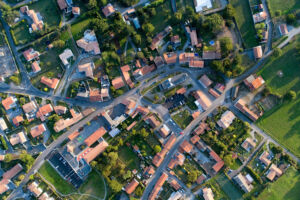
Homeowners are key players in the implementation of municipal heat planning. The project investigate sustainable heating solutions and exploring new participation formats.
Sustainability is under pressure. With its focus topic “Change is Possible,” ISOE shows how transformations can succeed.
Sustainability is central to our quality of life and economic stability. However, political, economic, and societal developments are currently shifting the priorities of many people. With the focus topic “Change is Possible,” ISOE consciously focuses on existing opportunities for change that still remain, even amidst polarized debates.
The protection of ecosystems, biodiversity, and climate ensures our natural foundations of life. Moreover, sustainable strategies aimed at this protection can not only minimize risks but also promote innovation and economic development. Additionally, sustainability has a social component. It can strengthen justice in society, for example, through fair working conditions and consideration for the needs of all generations.
Yet, in times of geopolitical crises and economic uncertainty, many people today no longer perceive climate protection and sustainability as progress, but rather as an additional burden in a daily life characterized by uncertainty, material concerns, and the loss of familiar orientations.
“Transformations toward sustainability must be tested and reflected upon, enabling social learning. To achieve this, we need new spaces for learning and experience.”
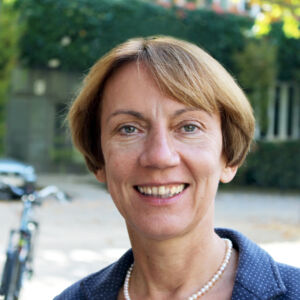
Prof. Dr. Flurina Schneider, Scientific Director
Accordingly, the tone of societal and political debates has shifted: sustainability is increasingly seen not as the key to a good life but rather as an obstacle to future readiness and security. Constructive proposals for personal responsibility and conscious consumption choices, as well as recommendations for politics and business to actively contribute to future readiness, appear to be out of date.
At the same time, technological innovations and weak future promises are increasingly dominating public debate. They are overshadowing the societal significance of change. As a result, the focus shifts away from the viable solutions and societal conditions for change that already exist, and the understanding that sustainable change does not start with technology – but where it intersects with social realities.
This is where the focus topic “Change is Possible” comes in. It consolidates insights from ISOE's long-standing sustainability research and highlights what is often overlooked: changes become possible where technological solutions meet social realities – everyday practices, values, conflicts, and different interests.
With our focus topic, we consciously link two perspectives: the realism that transformations can be conflicted, contradictory, and lengthy, and the confidence that change is possible. By bringing these perspectives together, we demonstrate that today there is a wealth of excellent scientific knowledge and viable approaches that can serve as guidance for a shift toward sustainability.