Business for Biodiversity: T-Labs for social-ecological change
In so-called Transformation Labs, the project works with companies in the food industry to research how measures to promote biodiversity can be effectively designed and implemented.

What are the causes of biodiversity loss? How can we protect biodiversity in the future? How can we create a willingness for change?
We cannot survive in a world without biodiversity. It is essential for the stability and health of our environment, as well as for our food, health, water, and protection against extreme events. However, biodiversity is under threat worldwide: habitats are being destroyed, species are going extinct, and ecosystems are becoming unbalanced.
The causes are entirely human-made, including intensive land use, pollution and climate change. The far-reaching consequences are evident in a 'biodiversity crisis,' which has the potential to disrupt the very foundations of human existence just as profoundly as the 'climate crisis.'
“As a society, we must understand and acknowledge the fundamental truth that without nature and its conservation, we have no long-term chance of survival.”
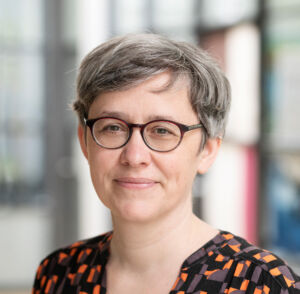
Dr. Marion Mehring, Head of the Research Unit Biodiversity and People
Efforts to protect biodiversity have been only partially successful. Reversing this trend requires a deeper understanding of the social drivers of biodiversity loss, including changes in societal values, agricultural and food systems, tourism, and demographic shifts.
Moreover, biodiversity protection needs to be redefined. It should no longer be seen as the opposite of using nature, but as an approach that recognises the complex interdependencies and interactions within ecosystems. These must form the basis for further research and future action.
In so-called Transformation Labs, the project works with companies in the food industry to research how measures to promote biodiversity can be effectively designed and implemented.

Sarah Nieß et al.
Khurelpurev Oyundelger et al.
Friedrich J. Bohn et al.
Anna Brietzke et al.
Julia S. Ellerbrok et al.
Michael Kreß-Ludwig et al.
Marion Mehring
Marion Mehring et al.
Sarah Nieß
Sophie Peter
Sophie Peter et al.
Masahiro Ryo et al.
Vera Schreiner et al.
Melina Stein, Lukas Sattlegger
Farina L. Tolksdorf et al.
Christina Trujillo Frede et al.
Almut Arneth et al.
Andrea Larissa Boesing et al.
Helge Bruelheide et al.
Nina Farwig et al.
Thomas Fickel et al.
Jennifer Hauck et al.
SHUXIN JI et al.
Valentin H. Klaus et al.
Alexandra-Maria Klein et al.
Michael Kreß-Ludwig
Sebastian Lakner et al.
Deike Lüdtke, Anna Brietzke
Marion Mehring et al.
Marion Mehring, Pia Ditscher, Melina Stein
Sophie Peter et al.
Carla-Leanne Washbourne et al.
Katja Brinkmann et al.
Thomas Fickel
Pirmin Kuß, Florian Dirk Schneider
Sebastian Köthe et al.
Ruth Müller et al.
Margot Neyret et al.
Lukas Sattlegger et al.
Lukas Sattlegger, Melina Stein, Johanna Freudenberg
Melina Stein, Lukas Sattlegger, Johanna Freudenberg
Lukas Drees et al.
Diana Hummel et al.
Ulan Kasymov et al.
Marion Mehring
Anika Tarne et al.
Ugo Arbieu et al.
Katja Brinkmann, Stefan Liehr, Lena Bickel
Gerlind U. C. Lehmann et al.
Alexandra Lux et al.
Marion Mehring et al.
Marion Mehring, Diana Hummel, Florian Dirk Schneider
Florian A. Männer et al.
Sophie Peter et al.
Florian Dirk Schneider et al.
Ugo Arbieu et al.
Thomas Fickel, Alexandra Lux, Florian Dirk Schneider
Thomas Fickel, Robert Lütkemeier, Diana Hummel
Stefan Liehr, Nicola Schuldt-Baumgart
Denise Margaret S. Matias et al.
Marion Mehring, Alexandra Lux, Thomas Jahn
Marion Mehring et al.
Friederike Reuß et al.
Thomas Fickel, Diana Hummel
Diana Hummel, Marion Mehring
Jiska van Dijk et al.
Jenny Bischofberger, Evelyne Gab, Stefan Liehr
Marion Mehring et al.
Diego A. Menestrey Schwieger et al.
Allan Watt et al.