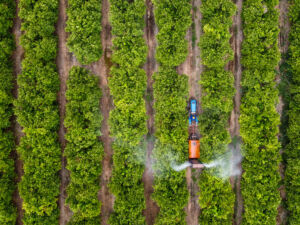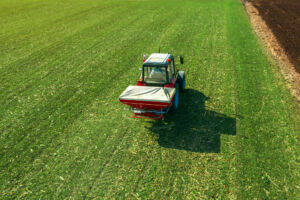
Recycled fertilizers from resource-oriented sanitation systems can match the fertilizing effect of conventional mineral fertilizers. This is demonstrated by a recent study—the first to compile international data on various recycled fertilizers at the product level—which has now been published in *Frontiers in Environmental Science*. The quality, safety, and effectiveness that make these recycled fertilizers sustainable alternatives in agriculture depend primarily on the raw material, processing, and application conditions.
Agriculture depends on a reliable supply of nutrients. Phosphorus, nitrogen, and potassium, for example, are indispensable for agricultural crop production. However, natural reserves are limited, vary greatly in regional availability, or are very energy-intensive to extract. Resource-oriented sanitation systems (ROS) offer a sustainable solution for managing these raw materials: They collect the nutrient-rich material streams from human excreta separately and, as far as possible, undiluted with water. After targeted treatment, the plant nutrients they contain can be made available for agricultural use again.
A research team has dedicated itself to this treatment process, compiling extensive international data on various ROS-based recycled fertilizers for the first time in a recent study. For 13 types of recycled fertilizers, sufficient data was available to characterize their properties in detail. Many can be classified into known categories of mineral, organic, or organic-mineral fertilizers in terms of nutrient composition and function. The results show that the recycled products are just as effective agronomically as conventional fertilizers.
Not Second-Class Fertilizers: Quality and Effectiveness Are Key
“Our findings provide an important scientific basis for their application, as they show that recycled fertilizers derived from separately collected material streams are not second-class fertilizers,” says Martina Winker of the Institute for Social-Ecological Research (ISOE), a co-author of the study. “What matters is what properties a fertilizer brings to the specific agricultural application, not whether it comes from a conventional or a recycled material stream.”
Research is now being conducted worldwide to determine how well such ROS-fertilizers perform and what requirements they must meet. “For the study, we compiled more than 450 data sets from over 200 sources across 32 countries and analyzed them at the product level. Our findings on individual fertilizer products show that nutrient recycling from human waste has long been a scientific topic at the international level,” says Ariane Krause of the Network for Sustainable Sanitation (NetSan), also a co-author of the study. “Until now, however, there has been no comprehensive overview of the wide variety of products, processes, and application conditions. We wanted to highlight what can actually be deduced from this broad body of evidence and where gaps in knowledge still exist.”
Nutrient Content Depends on Raw Materials and Processing
The nutrients contained in a ROS-fertilizer—as well as their form and concentration—depend largely on the raw material and the specific processing method. Physicochemical properties such as pH, salt content, or the proportion of organic matter also vary among products and influence their potential applications.
The picture is more nuanced when it comes to potential contaminants. Overall, the heavy metal concentrations examined were predominantly low and comparable to those in established fertilizers. The feedstock and treatment conditions are particularly critical for hygienic safety. In contrast, the data on organic contaminants such as pharmaceutical residues or PFAS is still incomplete and does not yet allow for a comparably comprehensive assessment across all product groups.
No Systematic Yield Disadvantage Compared to Mineral Fertilization
For agricultural practice, the question of whether recycled fertilizers can match the yields of conventional fertilizers is particularly relevant. In this context, it is not only the chemical composition that matters, but also whether the nutrients contained are actually available to the plants. The fertilizing effect was determined for the study using a quantitative meta-analysis of 134 data sets from 68 sources, including 31 crop species as well as field, pot, and hydroponic trials.
Across the recycled fertilizers examined, no systematic yield disadvantage was observed compared to mineral fertilizers; yields were generally significantly higher than in unfertilized control treatments. However, the specific effect depends, among other factors, on nutrient form, soil, crop, and management practices.
From Feasibility to Application
For several well-studied recycled fertilizers, the results shift the central question from feasibility to application: It is no longer merely a matter of whether high-quality fertilizers can be produced from resource-oriented sanitation systems. What is becoming more important is how suitable products can be reliably characterized, quality-assured, and integrated into existing agricultural and regulatory systems.
“The real challenge for establishing ROS-fertilizers is no longer simply whether a particular process works technically, but how it can be practically integrated into existing quality assurance and regulatory processes,” says Martina Winker of ISOE. “To achieve this, we need comparable testing methods, robust quality criteria, and organizational frameworks that take the actual properties of the products into account.”
Need for Action on the Legal Framework
From the perspective of the study’s authors, there is a particular need for action regarding the legal framework. While the recovery of phosphorus from sewage sludge and sewage sludge incineration ash is already regulated within the conventional wastewater system, comparable agricultural utilization and approval pathways are still lacking for resource-oriented sanitation systems.
“If we truly want to close nutrient cycles, the legal framework must not only account for phosphorus recovery at the end of the conventional wastewater system,” says Ariane Krause of NetSan. “Recycled fertilizers from resource-oriented sanitation systems should also be able to be used regularly under clear quality and safety requirements. The quality of the product should be the deciding factor—not the origin of the raw material.”
About the Study
The study “Recycling fertilizers from resource-oriented sanitation systems: product-level characterization and meta-analysis of agronomic performance,” with Corinna Schröder as lead author along with Franziska Häfner, Ariane Krause, Moritz Hallama, and Martina Winker, was published in Frontiers in Environmental Science. Participants included the Institute for Social-Ecological Research (ISOE), the Network for Sustainable Sanitation Systems (NetSan) e.V., the Leibniz Institute for Horticultural Science (IGZ) e.V., Agroscope in Switzerland, and the University of Girona in Spain. The study was conducted as part of the MARA project, based at NetSan and funded by the Heidehof Foundation. The project was carried out in close cooperation with the working group “Agricultural Use” of the DWA Technical Committee KA-1 “NASS – Resource-Oriented Sanitation Systems.”
Full publication citation
Schröder, C., Häfner, F., Krause, A., Hallama, M., & Winker, M. (2026): Recycling fertilizers from resource-oriented sanitation systems: product-level characterization and meta-analysis of agronomic performance. Frontiers in Environmental Science, 14:1843173. https://doi.org/10.3389/fenvs.2026.1843173
Scientific Contacts:
Dr. Martina Winker
Tel. +49 69 707 6919-53
martina.winker@isoe.de
www.isoe.de
Dr. Ariane Krause
ariane.krause@netsan.org
www.netsan.org
Press contact:
Melanie Neugart
Tel. +49 69 707 6919-51
melanie.neugart@isoe.de
www.isoe.de
Contact: