Hydrogeology Journal
Addressing complex social-hydrogeological challenges through inter- and transdisciplinary knowledge co-production
Linda Söller et al.
2026
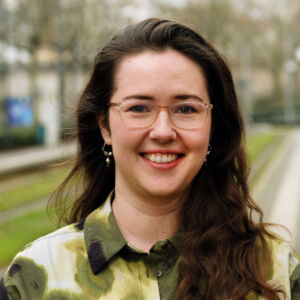
Dženeta Hodžić has been a research scientist at ISOE since 2020. Her ethnographic research addresses (inter- and transdisciplinary) knowledge practices, groundwater, water infrastructures and nature conservation in European karst landscapes.
In her dissertation "Unruly Undergrounds. Towards a Political Geomorphology of Groundwater in Post-Yugoslav Karst Landscapes" (2026, Institute for Cultural Anthropology and European Ethnology, Goethe University Frankfurt) she examines how an underground that resists easy access is known, protected and contested: in water supply and public authorities, in hydrogeological measurement practices, in nature conservation, and in everyday relations of care towards springs and wells. Methodologically, she combines multi-sited ethnography with transdisciplinary formats, working closely with professionals. A continuous interest lies in the question of how knowledge about hard-to-access environments is produced, becomes authoritative, and remains contested. Related to this is the question of the position of ethnographic research itself, which increasingly works within such constellations rather than merely observing them.
She is an associated researcher at the DFG Research Training Group "Fixing Futures – Technologies of Anticipation in Contemporary Societies". She studied European Ethnology and English at Humboldt-Universität zu Berlin, with (research) stays at the University of Amsterdam and the University of Sarajevo; she gained her first research experience at the WZB Berlin Social Science Center and at IRI THESys (Humboldt-Universität zu Berlin). Prior to her work on groundwater, she conducted research on the implementation of European renewable energy policies and on sociotechnical imaginaries in Bosnia and Herzegovina.
Linda Söller et al.
Dženeta Hodžić
Dženeta Hodžić
Fanny Frick-Trzebitzky et al.
Fanny Frick-Trzebitzky et al.